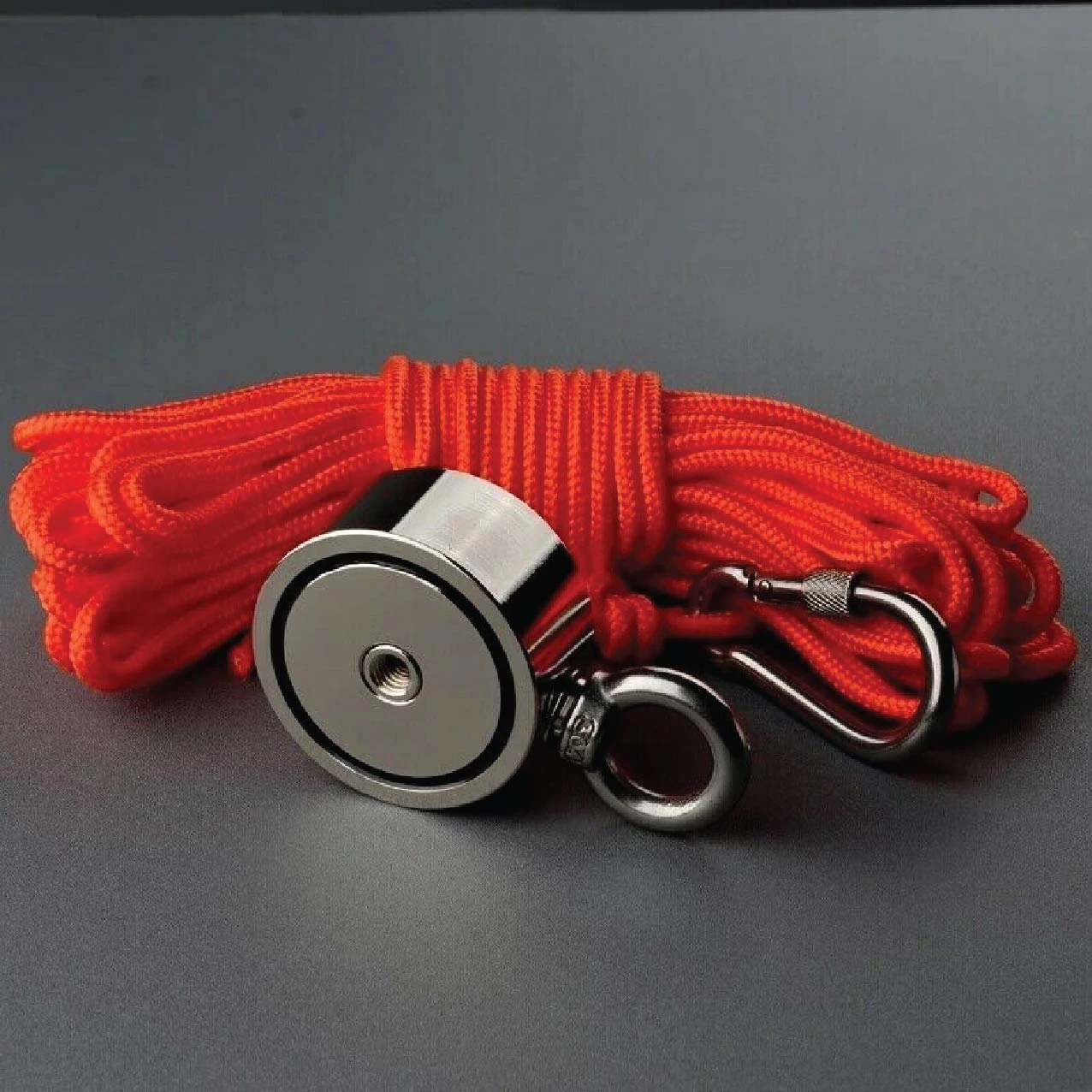
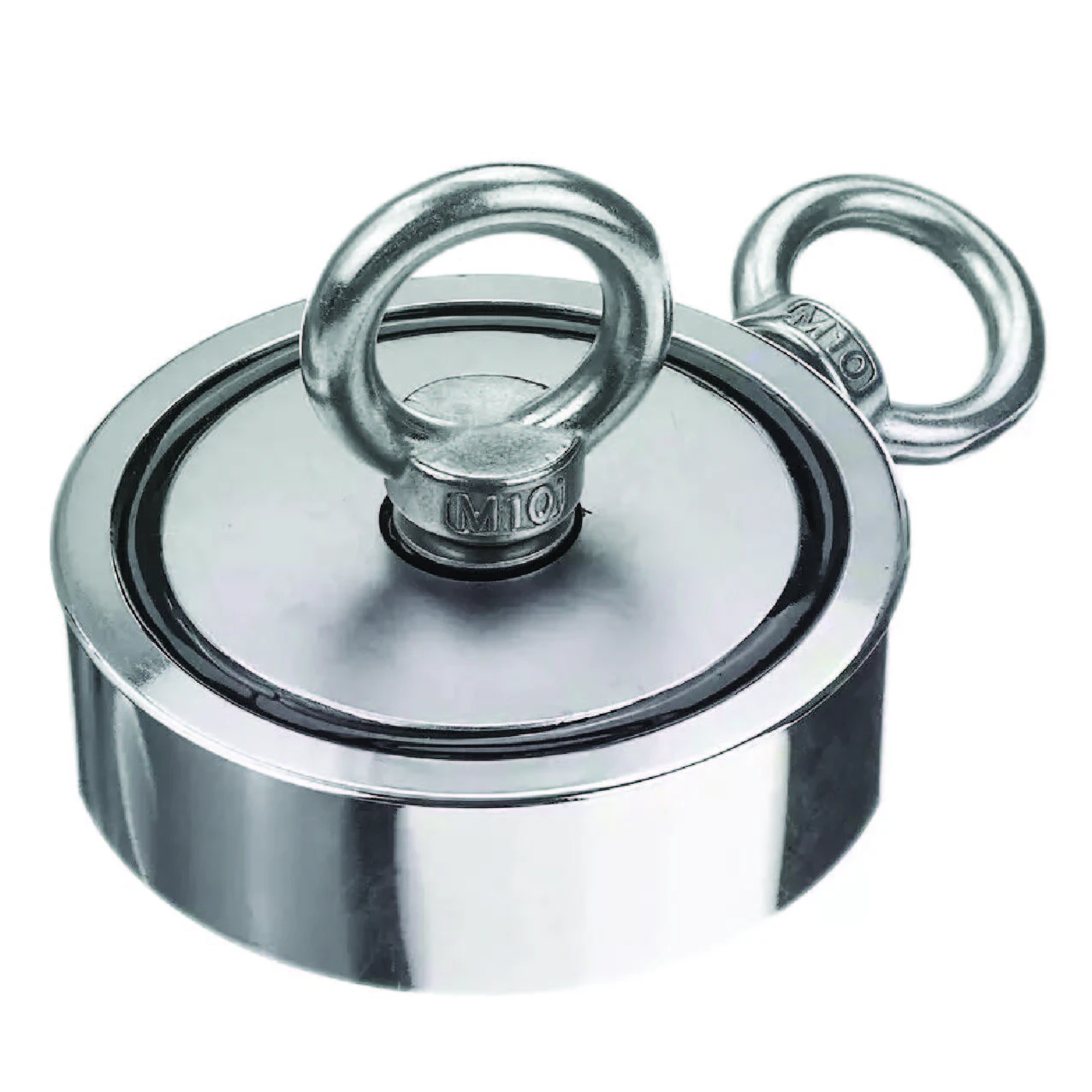
1. Overall Form and ConstructionShape & Dimensions: The body is a thick, circular cylinder (puck-style) approximately 2–3″ thick (exact dimensions vary by manufacturer). Both faces (top and bottom) are flat, allowing equal magnetic attraction on each side.
Material: Encased in a nickel-plated steel shell. The nickel finish gives it a smooth, corrosion-resistant outer layer—ideal for repeated submersion in water. Inside, there is a high-grade neodymium magnet (NdFeB) block or array, providing very strong pull force.
2. Double‐Eye Bolt Design
3. Pull Rating (“2600 lb”)“2600 lb” Pull Force: Indicates an ideal maximum pull force of around 2,600 pounds (≈1,180 kg) when the magnet is in perfect contact with a thick, clean, flat steel surface under laboratory conditions. In real-world use (mud, rust, paint, uneven surfaces), actual pull strength is often reduced—sometimes by 20–50%.
Use Case: This rating makes it suitable for retrieving large anchors, car parts, tools, or heavy scrap out of a lake or river. It’s not meant to hold a 2,600 lb load safely in mid-air; it simply means that, on a perfect surface, the breakaway force is approximately that much.
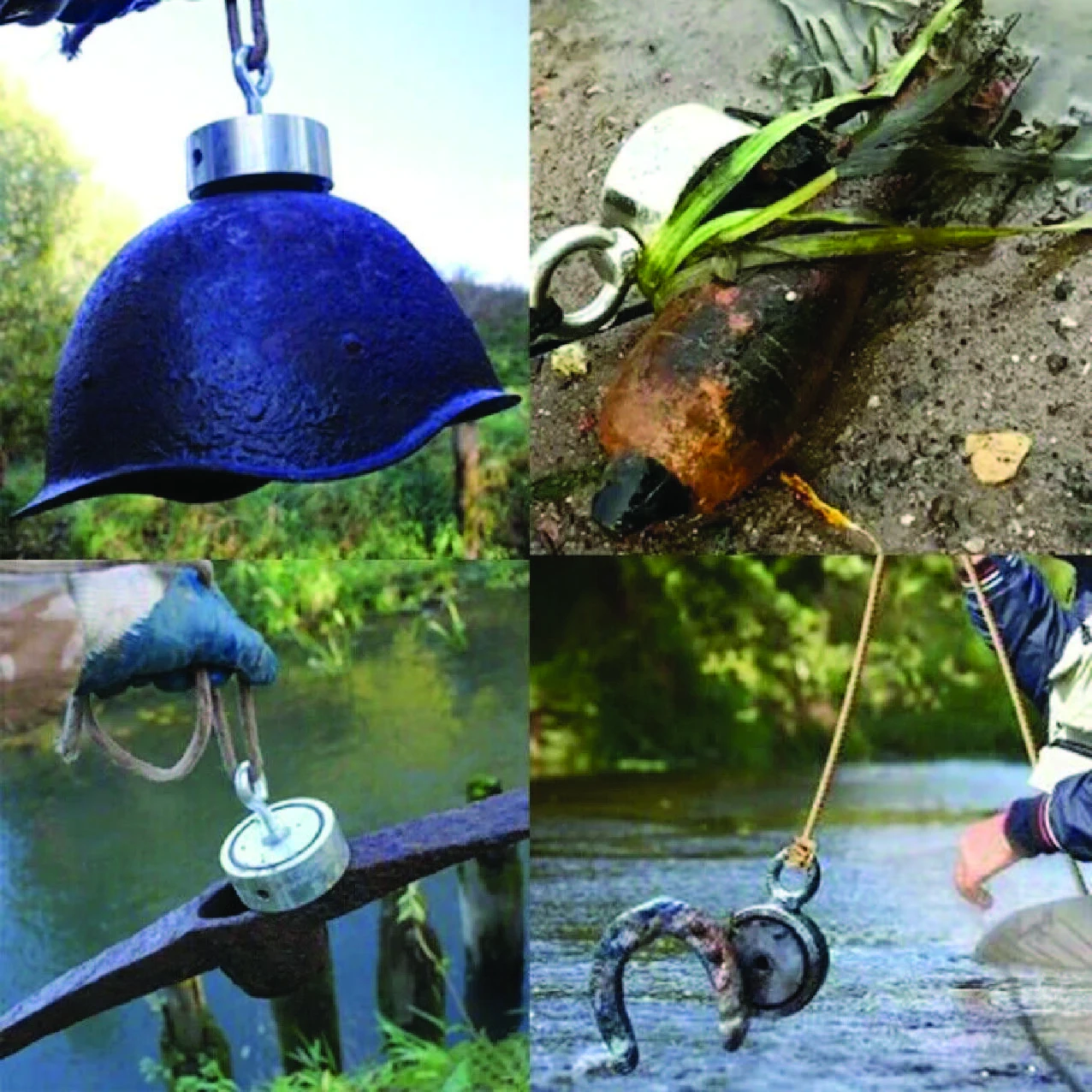
4. Typical UsesMagnet Fishing Tie a sturdy rope to one eyebolt, toss the other face down into water, “fish” for buried or submerged ferrous objects (bicycles, nails, car parts, etc.). Once you feel a “jerk” or see the rope sliding, gently pull upward to retrieve whatever’s stuck to the magnet.
Salvage & Retrieval Use in ponds, canals, wells, or drainage ditches to recover tools or metallic debris. Often used by municipalities or private contractors to clean up construction sites or waterways.
Industrial Lifting Aid (Light-Duty) When mounted beneath a steel plate or beam (top side of the magnet), it can temporarily hold up small items (hooks, chains, light signs). The second eyebolt can then hold that load. Note: Always factor in a safety margin; never exceed about 20–30% of the rated pull force for overhead lifting.
5. Practical Considerations
6. How to Use (Step‐by‐Step)Preparation Inspect both magnet faces. Wipe away any debris or rust. Securely screw in (and torque) the eyebolt(s) if they’re removable. Attach a strong rope or braided line (minimum 3/8″ dynamic rope recommended) to one of the eyebolts.
Lowering Locating Objects Slowly drag the magnet across the bottom surface, listening/feeling for any change in tension. When it “locks on,” pause and gently pull to see if it has latched onto something substantial.
Retrieval Slowly pull the magnet straight up (avoid jerking). If the target object is heavy, angle yourself so you can brace and let gravity help free it from the mud or silt. Once retrieved, detach the object from the magnet (wear gloves—sharp metal edges are common).
7. Safety TipsWear Protective Gear: Mind Pinch Points: Be Aware of Surroundings: Do Not Use Near Electronic Devices: Strong neodymium magnets can damage hard drives, credit cards, pacemakers, and other sensitive electronics.
Avoid Contact with Explosives:
|

 English